Optrel crystal 2.0 Review
Verdict: The crystal 2.0 has the brightest light state we can verify (shade 2.0) and automatic shade selection, but Optrel itself rates the lens 1/1/1/2, not 1/1/1/1. This optrel crystal 2.0 review uses only specs the maker publishes; anything else is marked “not confirmed”.
It's in the $300–$600 band, with a spec score of 68/100.Compare it with the top picks in our best welding helmets ranking and the best auto-darkening helmets list.
We may earn a commission when you buy through our links. As an Amazon Associate I earn from qualifying purchases. How this works.
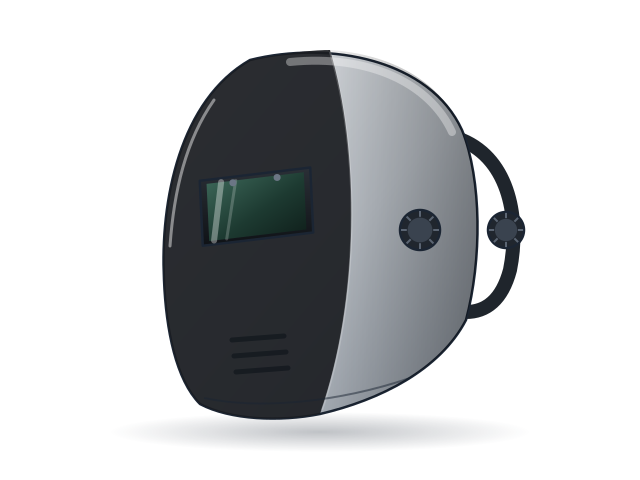
- Shade2.0 / 4–12
- Viewing area100 × 50 mm (7.8 sq in)
- Arc sensors3
- Switching0.100 ms (room temp), 0.070 ms (55°C)
- Optical class1/1/1/2
- Weight460 g
- CertificationsEN 379
- Best forTIG · MIG · pros
Who the Optrel crystal 2.0 (silver) is for — and who should skip it
Buy it if: TIG and MIG welders who switch processes often and value a bright light state and automatic shading over window size.
Skip it if: Heavy stick or gouging work that needs darker than shade 12, or anyone who wants a big window.
Pros and cons
Pros
- Shade 2.0 light state — you can keep the hood down while fitting up
- Autopilot sets the dark shade between 4 and 12 automatically
- 460 g, the second-lightest auto-darkening helmet with a manufacturer weight
- Twilight mode lightens the lens gradually after the arc stops
Cons
- Optrel rates it 1/1/1/2 (angular dependence 2), despite 1/1/1/1 claims elsewhere
- 50 × 100 mm window (about 7.75 sq in) is small for the price
- Dark range stops at 12; Optrel's pages name EN 379 but not ANSI Z87.1
Our review
Optrel's own technical data settles two things that retail listings blur. The lens is EN 379 class 1/1/1/2 — the last digit (angular dependence) is a 2 — and the viewing area is 50 × 100 mm. Neither is bad, but neither is class-leading at this price.
What the crystal 2.0 does better than anything else here is the light state: shade 2.0, so you can see the joint clearly with the hood down. Autopilot then chooses the dark shade from 4 to 12, which suits welders who jump between TIG and MIG all day. Switching is 0.1 ms at room temperature.
At 460 g it is light, and buyers praise the visibility and colour rendering, with mixed comments on brightness. The limits are the 12 maximum shade and the certification list: Optrel's pages name EN 379 only, so if your site requires ANSI Z87.1 marking, check the helmet's label.
Full specs and sources
| Spec | Value | Source |
|---|---|---|
| Shade range | 2.0 / 4–12 | Manufacturer autopilot auto-shade 4-12 |
| Optical class (EN 379) | 1/1/1/2 | Manufacturer NOT 1/1/1/1 — angular dependence class 2 |
| Viewing area | 100 × 50 mm (7.8 sq in) | Manufacturer Optrel calls this the actual viewing area; ~7.75 in² |
| Lens / plate size | Not published | — |
| Arc sensors | 3 | Manufacturer |
| Switching speed | 0.100 ms (room temp), 0.070 ms (55°C) | Manufacturer = 1/10,000 s at room temp |
| Low-amp TIG rating | Not published | — |
| Certifications | EN 379 | Manufacturer ANSI Z87.1 only in distributor catalog (powerweldinc.com Optrel program PDF) — FLAG: ANSI not confirmed on Optrel page |
| Weight | 460 g | Manufacturer |
| Power | solar + 2x CR2032 | Manufacturer |
| Warranty | 2 (+1 if registered within 6 months) years | Manufacturer |
Spec score: 68/100 (verified specs only — not a test score)
| Part | Basis | Points |
|---|---|---|
| Optical class | 1/1/1/2 | 20/25 |
| Viewing area | 7.8 sq in | 15/25 |
| Arc sensors | 3 | 11/15 |
| Switching speed | 0.100 ms (room temp), 0.070 ms (55°C) | 5/10 |
| Weight | 460 g | 10/10 |
| Warranty | 2 (+1 if registered within 6 months) yr | 3/5 |
| Value | $300–$600 | 4/10 |
Alternatives to the Optrel crystal 2.0 (silver)
Miller Classic VS ClearLight (Black)
At 454 g the Miller Classic VS is the lightest auto-darkening helmet with a manufacturer weight, and it adds cut shades and a 5 A TIG rating under $150.
$60–$150
Hobart Inventor (Black)
Hobart's Inventor 770890 gives you four sensors, a 100 × 60 mm window and ANSI/CSA/EN 379 compliance in the $60–$150 band; Hobart does not publish an optical class.
$60–$150
Where it ranks
Changelog: Oct 2026: First published. Every pick checked against manufacturer specs and Amazon availability.