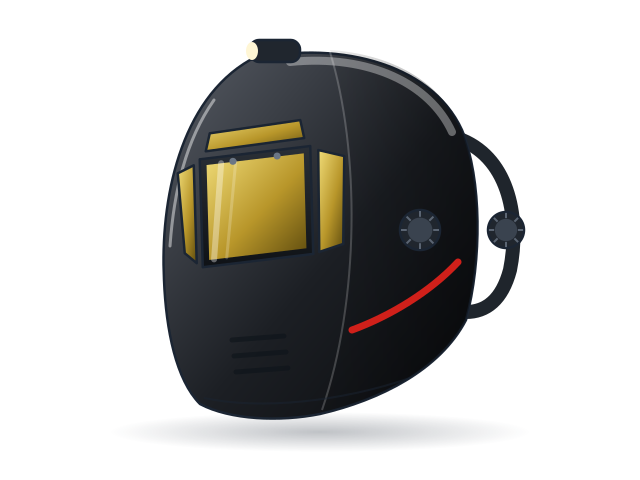
The best welding helmet for the money is the Hobart Inventor (Black): 4 arc sensors, a 100 × 60 mm window and ANSI Z87.1-2015, CSA, EN 379 compliance, all from the maker's spec sheet, in the $60–$150 band.
“For the money” here means verified spec per dollar at any price, which is different from our best budget welding helmet list (cheapest helmet worth buying). We score each helmet on published specs only; see how we rank.
We may earn a commission when you buy through our links. As an Amazon Associate I earn from qualifying purchases. How this works.
Best welding helmets for the money, ranked by verified spec per dollar
Ranked by our published method: manufacturer-verified safety specs first, then optical class, viewing area, sensors and switching speed, comfort and weight, buyer feedback and value.
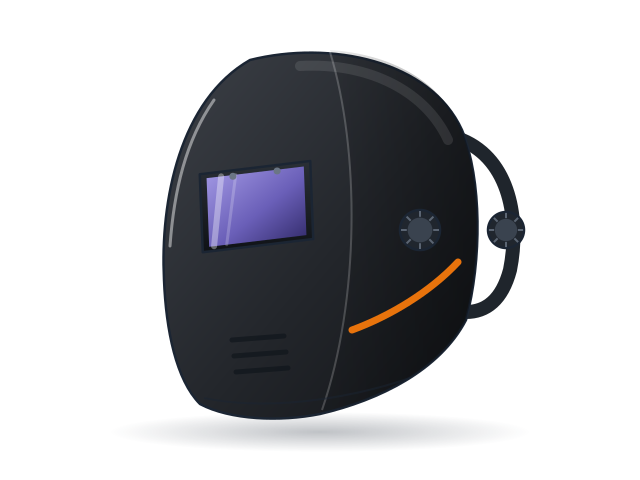
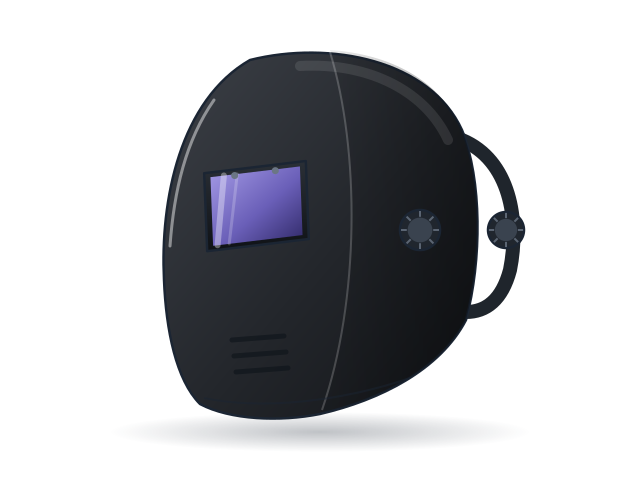
Most verified spec per dollar: four sensors, 9.3 sq in, three standards.
Shade3 / 9–13
Viewing area100 × 60 mm (9.3 sq in)
Arc sensors4
Switching1/25,000 s
Optical classNot published
Weight560 g
CertificationsANSI Z87.1-2015, CSA, EN 379
Best forMIG · stick · flux-core · beginners
Pros
Four arc sensors and a 100 × 60 mm (9.3 sq in) window, per Hobart's spec sheet
Meets ANSI Z87.1-2015, CSA and EN 379 (Hobart)
560 g with simple analog shade, sensitivity and delay knobs
Buyers say it rivals far pricier helmets for visibility
Cons
Hobart does not publish an optical class
Dark range 9–13 only — no 5–8 range for torch or plasma cutting
Some buyers say the shell feels fragile; 2-year warranty
Skip it if: Low-amp TIG welders or anyone plasma cutting, who need the 5–8 shades it lacks.
Spec score 61/100 (verified specs only, not a test score): Optical class 0/25 · Viewing area 17/25 · Arc sensors 15/15 · Switching speed 10/10 · Weight 8/10 · Warranty 3/5 · Value 8/10. How it works
Miller · model Classic Series VS 287803 · $60–$150
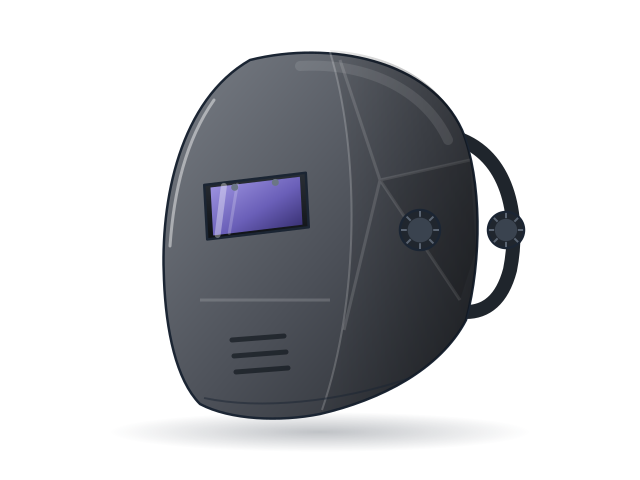
Cut shades, a 5 A TIG rating and a 3-year warranty under $150.
Shade3.0 / 8–13 (cut 5–8, grind 3)
Viewing area6 sq in
Arc sensors2
Switching1/23,000 s
Optical class1/1/1/2
Weight454 g
CertificationsANSI Z87.1+, CSA, CE
Best forTIG · MIG · beginners
Pros
454 g — the lightest verified complete auto-darkening helmet we list
Weld 8–13, cut 5–8 and grind 3 with digital controls
5 A TIG rating; ANSI Z87.1+, CSA and CE (Miller)
3-year lens warranty
Cons
Two sensors and 1/23,000 s switching
6 sq in window — the smallest of the premium-brand helmets
Some buyers report the headgear breaking within weeks; 1/1/1/2
Skip it if: Out-of-position welders — two sensors are easier to block than four.
Spec score 68/100 (verified specs only, not a test score): Optical class 20/25 · Viewing area 11/25 · Arc sensors 7/15 · Switching speed 8/10 · Weight 10/10 · Warranty 4/5 · Value 8/10. How it works
ESAB pages disagree on switching time (0.04 ms vs 0.8 ms in a press release); we use the spec page
Skip it if: Anyone sensitive to helmet weight — the Miller Classic VS is 190 g lighter.
Spec score 84/100 (verified specs only, not a test score): Optical class 25/25 · Viewing area 24/25 · Arc sensors 15/15 · Switching speed 10/10 · Weight 6/10 · Warranty 0/5 · Value 4/10. How it works
Shade9–13 (light state not stated; grind option per product page)
Viewing area3.62 × 1.65 in (6 sq in)
Arc sensors2
Switching1/25,000 s
Optical class1/1/1/2
Weight470 g (shell)
CertificationsANSI Z87.1, EN 166, EN 175, EN 379
Best forMIG · flux-core · beginners
Pros
ANSI Z87.1, EN 166, EN 175 and EN 379 in Forney's own manual
Published 1/1/1/2 optical class and 1/25,000 s switching
External shade knob; TIG-rated to 5 A
Cons
Two sensors and a 5.97 sq in window
Dark range 9–13 only
Forney's manual says the lithium cells are not replaceable (product page says CR2032 — check yours)
Skip it if: Anyone who welds daily or needs a cutting shade range.
Spec score 58/100 (verified specs only, not a test score): Optical class 20/25 · Viewing area 11/25 · Arc sensors 7/15 · Switching speed 10/10 · Weight 0/10 · Warranty 0/5 · Value 10/10. How it works
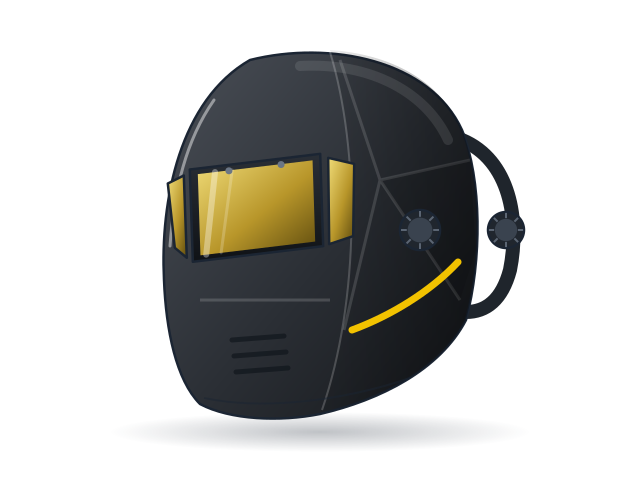
Side windows in the $60–$150 band, with unconfirmed certifications.
Shade4 / 5–9, 9–13 (side windows fixed DIN 5)
Viewing area100 × 83 mm (12.9 sq in)
Arc sensors4
Switching<1/30,000 s
Optical classNot published
WeightNot published
CertificationsNot published
Best forMIG · flux-core
Pros
Fixed DIN 5 side windows widen peripheral vision
Four sensors and 5–9 / 9–13 dark ranges
Buyers like the field of view and weight
Cons
Side windows do not auto-darken (fixed shade 5)
Optical class differs across YesWelder pages; certifications not confirmed
Reports of early headgear failure and occasional arc flash
Skip it if: Anyone sensitive to stray light — side windows let more light in by design.
Spec score 57/100 (verified specs only, not a test score): Optical class 0/25 · Viewing area 24/25 · Arc sensors 15/15 · Switching speed 10/10 · Weight 0/10 · Warranty 0/5 · Value 8/10. How it works
If you search for a welding mask rather than a helmet, the answer doesn't change: the Hobart Inventor (Black) gives the most verified protection per dollar. If you need cut shades too, the Miller Classic VS ClearLight (Black) adds a 5–8 range and a 5 A and below TIG rating for a similar price, with fewer sensors.
Best welding helmet under $200
Everything in the $60–$150 band qualifies. Under $200 the choice is between the Hobart Inventor (Black) (4 sensors, 9.3 sq in) and the Miller Classic VS ClearLight (Black) (2 sensors, 454 g). Pick the Hobart for MIG and stick, the Miller for TIG and cutting.
Best auto-darkening welding helmet under 200
Both are auto-darkening. Above $200 the next real step is a 1/1/1/1 lens, which means the ESAB Sentinel A60 in the $300–$600 band. Compare all of them in the helmet comparison table.
What you give up by not paying more
Mostly optics and view: no variable-shade helmet under $150 that we could verify has a 1/1/1/1 lens, and the windows are 6–9.3 sq in versus 12.5–13.4 sq in on the premium picks. If you weld a few hours a week that's fine; if you weld all day, read why optical class matters before deciding.
Questions buyers ask
What is the best welding helmet for the money?
The Hobart Inventor (Black). It has four sensors, a 9.3 sq in view and three named standards for under $150 — more verified spec per dollar than anything else we checked.