Why Does My Welding Helmet Keep Flickering?
If you can't see through your welding helmet, or it keeps flickering, the cause is usually a blocked or dirty sensor, a low battery, sensitivity set too low, or a low-amp TIG arc too weak to trigger it. Each has a two-minute fix below.
If none work, the lens may be failing — compare replacements on our auto-darkening helmet page.
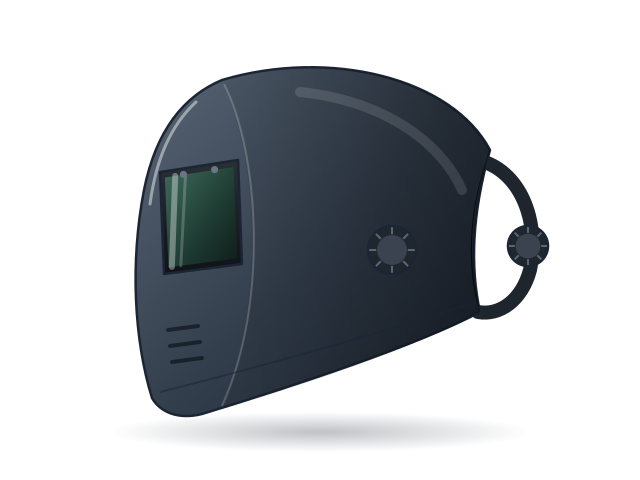
I can't see through my welding helmet: first checks
- Lens stuck dark? Check it isn't in a test or lock mode, and that delay isn't set to maximum.
- Everything blurry? Replace the cover lenses — spatter and haze build up fast. See how to replace a cover lens.
- Too dark to see the joint? Lower the shade (never below the OSHA minimum) or check the light state isn't set to a grind lock.
Why the lens flickers mid-weld
- Blocked sensors: your hand, torch or the work hides them. Four-sensor helmets — or Miller's X-Mode — fix this.
- Low battery: replace the coin cell (most use CR2450 or CR2032).
- Sensitivity too low: turn it up, especially for TIG under 20 A.
- Dirty sensors: wipe them; Lincoln's manual asks you to keep sensors and the solar cell clean.
Flicker on low-amp TIG
A low-amp TIG arc gives off far less light than MIG or stick, and the torch cup can hide it from the sensors. Turn sensitivity to its highest setting, keep the sensors facing the arc, and check the helmet's low-amp TIG rating. Lincoln rates the Lincoln Electric Viking 3350 (Black) down to 2 A; see more on our TIG helmet page.
Do welding helmets expire
Not on a date, but auto-darkening cartridges wear out: batteries and solar cells age, and LCDs degrade with heat. Replace the helmet or cartridge if it fails to darken reliably, the shell is cracked, or it's dropped hard. Many makers' warranties (2–5 years) are a useful guide to expected life.
Our recommendation
If your helmet only has two sensors and flickers out of position, a four-sensor helmet like the Hobart Inventor (Black) fixes it — see the full list.